What Is a Money Tree?
Discover everything about the Money Tree (Pachira aquatica). Explore expert plant care tips, watering guides, soil requirements, troubleshooting for yellow leaves, and Feng Shui symbolism for indoor growth.
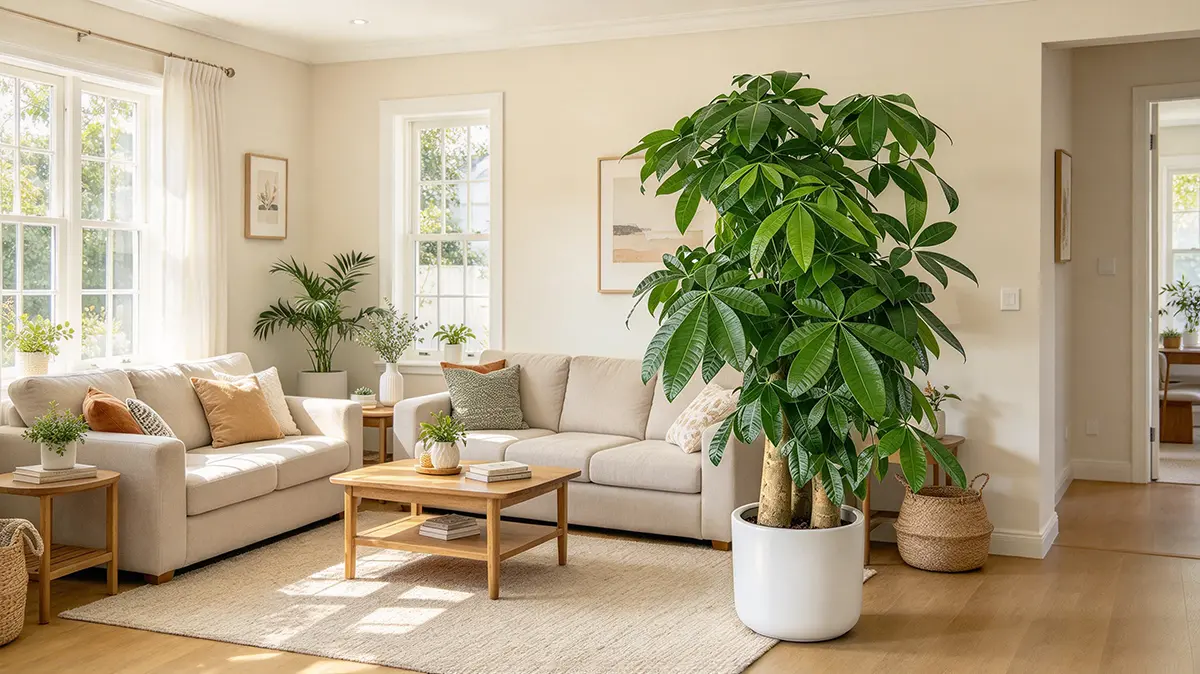
A comprehensive guide to the Money Tree — the beloved indoor houseplant known botanically as Pachira aquatica — covering its origins, physical traits, care essentials, and the Feng Shui symbolism that made it a global favorite.
Native to the tropical swamps and riverbanks of Central and South America, the Money Tree has made a seamless transition from its flooded natural habitat to living rooms, offices, and apartments around the world. Its striking braided trunk, glossy palmate leaves, and rich cultural symbolism make it far more than a decorative object. Whether you are a first-time plant owner or an experienced green thumb, the Money Tree offers a rewarding combination of beauty, adaptability, and meaning. For the full care picture, see our Care & Upkeep guide and the Nutrition & Environment overview.
What Is Pachira aquatica? #
Pachira aquatica is a tropical wetland tree belonging to the family Malvaceae (formerly classified under Bombacaceae). In the wild, it grows naturally along riverbanks, in swampy lowlands, and in seasonally flooded forests stretching from Mexico through Central America and into northern South America, including countries such as Guatemala, Costa Rica, Colombia, and Brazil. In its native environment, the tree can reach heights of up to 18 meters (about 60 feet), producing large, showy cream-colored flowers and substantial woody seed pods filled with edible, chestnut-like seeds.
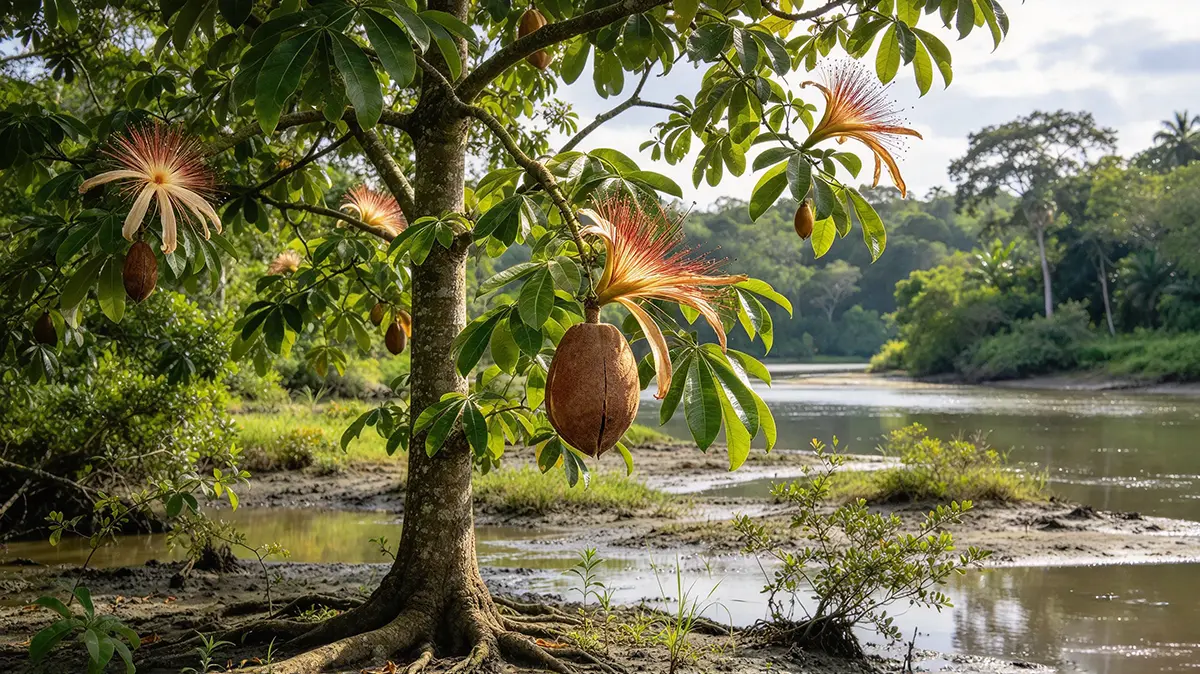
“This image has been verified through research and was generated by AI to demonstrate its growing environment and appearance.”
The plant you purchase at a nursery or garden center is almost always a much smaller, cultivated version — typically sold with multiple young stems braided together while still flexible and juvenile. This braiding has become the plant’s most iconic visual trademark in cultivation, though it does not occur naturally in the wild.
Common Names #
Pachira aquatica goes by a surprisingly wide range of common names depending on the region and context:
- Money Tree — the most widely used name in the houseplant trade, especially in North America and East Asia.
- Malabar Chestnut — references the edible seeds reminiscent of chestnuts.
- Guiana Chestnut — reflects its South American native range.
- French Peanut — used in parts of the Caribbean and Latin America.
- Provision Tree — a historical name acknowledging the plant’s use as a food source.
- Saba Nut — another regional name used across parts of tropical Asia, where the plant has been widely cultivated.
Physical Description #
Understanding what your Money Tree should look like helps you identify a healthy plant and spot early signs of trouble.
Leaves #
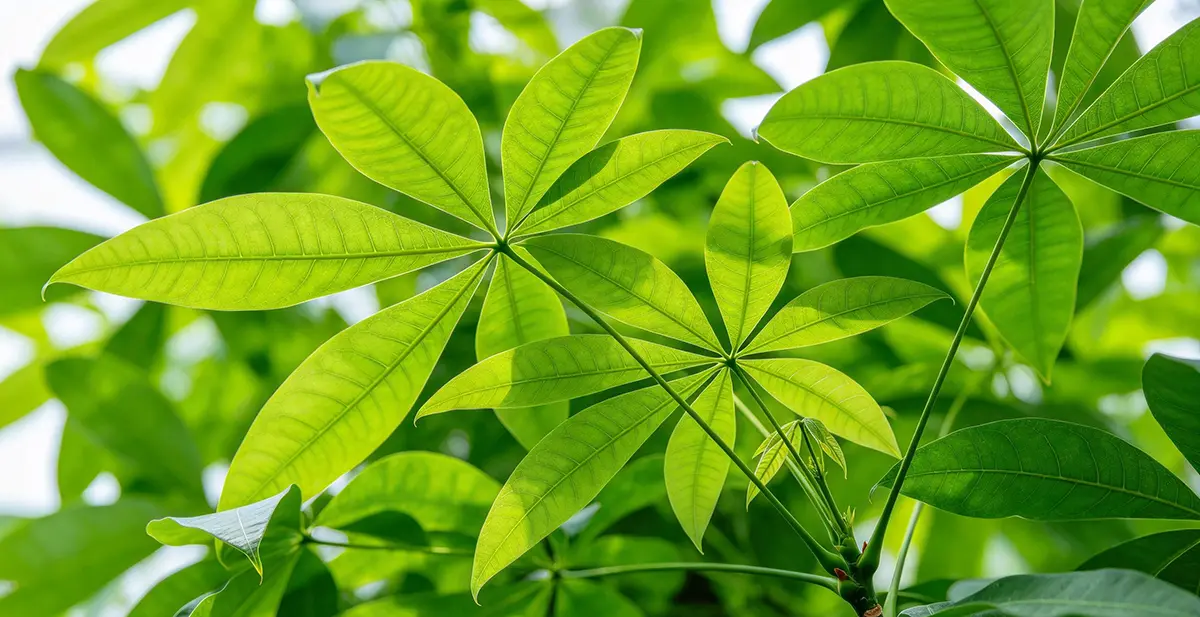
Palmate compound leaves, each composed of 5 to 9 elongated leaflets radiating from a single point on the petiole. Leaflets are glossy, deep green, and lance-shaped — a reliable indicator of the plant’s overall health.
Trunk & Bark #
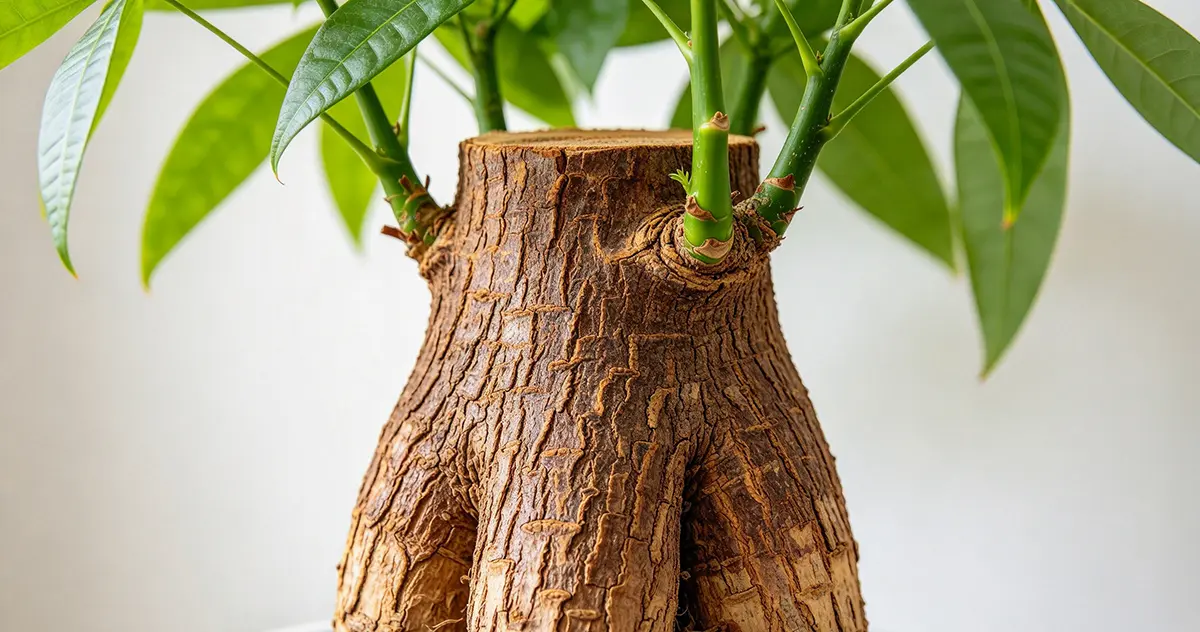
Smooth, gray-green bark with a slightly swollen base. Cultivated plants feature the signature braided trunk, achieved by intertwining three to seven juvenile stems and training them as they grow.
Flowers & Fruit #
In the wild, cream to pale yellow flowers with long, brush-like stamens bloom seasonally. Large, oval woody seed pods (up to 30 cm long) follow, containing several large, edible seeds — though indoor plants rarely flower or fruit.
Indoor Size #
Indoors, a mature Money Tree typically reaches 1.5 to 1.8 meters (5–6 feet) in height, though growth rate and ultimate size depend heavily on pot size, light, and care conditions.
Quick Facts #
DetailInformation Scientific NamePachira aquatica FamilyMalvaceae (formerly Bombacaceae) OriginMexico, Central America, northern South America Indoor Height1.5 – 1.8 m (5 – 6 ft) typical Light NeedsBright indirect light; tolerates medium light Watering FrequencyEvery 1–2 weeks; allow soil to partially dry Pet SafetyNon-toxic to cats, dogs, and horses (ASPCA) Hardiness (Outdoor)USDA Zones 10–12
Money Trees are listed as non-toxic to cats, dogs, and horses by the American Society for the Prevention of Cruelty to Animals (ASPCA), making them one of the safer choices for pet-friendly households. Always supervise pets around any plant, as ingestion can still cause mild digestive upset in sensitive animals.
Natural Habitat #
In the wild, Pachira aquatica thrives in conditions that most houseplants would find intolerable. It grows along the edges of rivers, streams, and tropical swamps, where its roots regularly sit in — or near — standing water. This flood tolerance is a key evolutionary adaptation, and it partly explains why the plant is more forgiving of overwatering than many other popular houseplants.
The natural flooding tolerance of Pachira aquatica is why so many care guides warn against the opposite extreme: root rot from consistently waterlogged soil in pots without drainage. In nature, floodwaters recede. In a pot, they don’t — so good drainage is essential even for this water-adapted species.
Why Is It So Popular Indoors? #
The Money Tree’s journey from tropical riverbank to global houseplant phenomenon is no accident. Several qualities make it exceptionally well-suited to indoor life:
- Light adaptability: while it prefers bright indirect light, the Money Tree tolerates lower light conditions better than many tropical plants, making it practical for typical home and office environments.
- Air-purifying qualities: like many leafy tropicals, Pachira aquatica contributes to improved indoor air quality by absorbing carbon dioxide and releasing oxygen, and it has been included in studies on plants that may help filter volatile organic compounds (VOCs).
- Low maintenance: once you understand its watering cadence and light preferences, the Money Tree is genuinely forgiving. It does not demand daily attention or constant intervention.
- Cultural and symbolic meaning: in Feng Shui and East Asian traditions, the Money Tree is believed to bring good luck, prosperity, and positive energy. The five leaflets on each leaf are said to represent the five elements of Feng Shui: wood, water, fire, earth, and metal.
- Aesthetic appeal: the braided trunk and lush canopy give the Money Tree a sculptural quality that elevates any interior space.
Explore More #
Continue through the guide to go deeper into every aspect of owning a Money Tree:
- Introduction — the complete overview of Pachira aquatica and what to expect as an owner.
- Care & Upkeep — light, watering, soil, pruning, and repotting essentials.
- Nutrition & Environment — temperature, humidity, fertilization, and air quality.
- Troubleshooting — yellow leaves, root rot, pests, and other common problems.
- Propagation — how to grow new Money Trees from cuttings.
- Blog — the latest articles and seasonal care tips.
Frequently Asked Questions #
Is the Money Tree easy to care for? #
Yes — the Money Tree is widely considered one of the more beginner-friendly tropical houseplants available. Its main requirements are:
- Bright indirect light — near an east- or west-facing window is ideal.
- Well-draining soil — a loose mix that never stays soggy.
- A consistent watering routine — allow the soil to partially dry out between waterings.
It does not need frequent fertilization, tolerates occasional neglect better than fussier plants, and adapts to a range of indoor humidity levels. The most common mistake new owners make is overwatering, which can lead to root rot, but this is easily avoided by checking soil moisture before watering rather than watering on a fixed daily schedule.
How fast does a Money Tree grow indoors? #
Indoors, Money Trees are moderate growers. Under good conditions — bright indirect light, appropriate watering, and regular feeding during the growing season — you can expect your plant to put on roughly 30 to 60 cm (12 to 24 inches) of new growth per year. Growth naturally slows or pauses in winter when light levels drop and temperatures cool. Pot size also plays a significant role: a root-bound plant in a small container will grow more slowly than one given room to expand. If you want to encourage faster growth, move the plant to a brighter location and begin fertilizing monthly in spring and summer.
Can a Money Tree survive in low light? #
The Money Tree can tolerate lower light conditions better than many tropical species, but “tolerates” is not the same as “thrives.” In genuinely low light (a north-facing room or a spot far from any window), growth will slow considerably, leaves may become smaller and paler, and the plant becomes more vulnerable to overwatering because the soil stays wet longer. For the best results, place your Money Tree in bright indirect light. If natural light is limited in your space, a full-spectrum grow light used for 10 to 12 hours per day can compensate effectively.
Does the braided trunk on a Money Tree occur naturally? #
No — the braided trunk is entirely a human cultivation technique, not something that happens in nature. Nursery growers braid three to seven young, flexible stems together while the plants are still juvenile and continue training them upward as they grow. Over time, the stems fuse and harden into the distinctive woven pattern you see at point of sale. Once the trunk has hardened and woody growth has set in (typically by the time you purchase the plant), it can no longer be re-braided or significantly reshaped. The braiding has no effect on the plant’s health — it is purely aesthetic.
If you’re just getting started, the single most impactful habit you can build is checking your soil before you water. Push your finger about 5 cm (2 inches) into the potting mix — if it still feels damp, wait a few more days. This one practice prevents the majority of Money Tree problems new owners encounter.